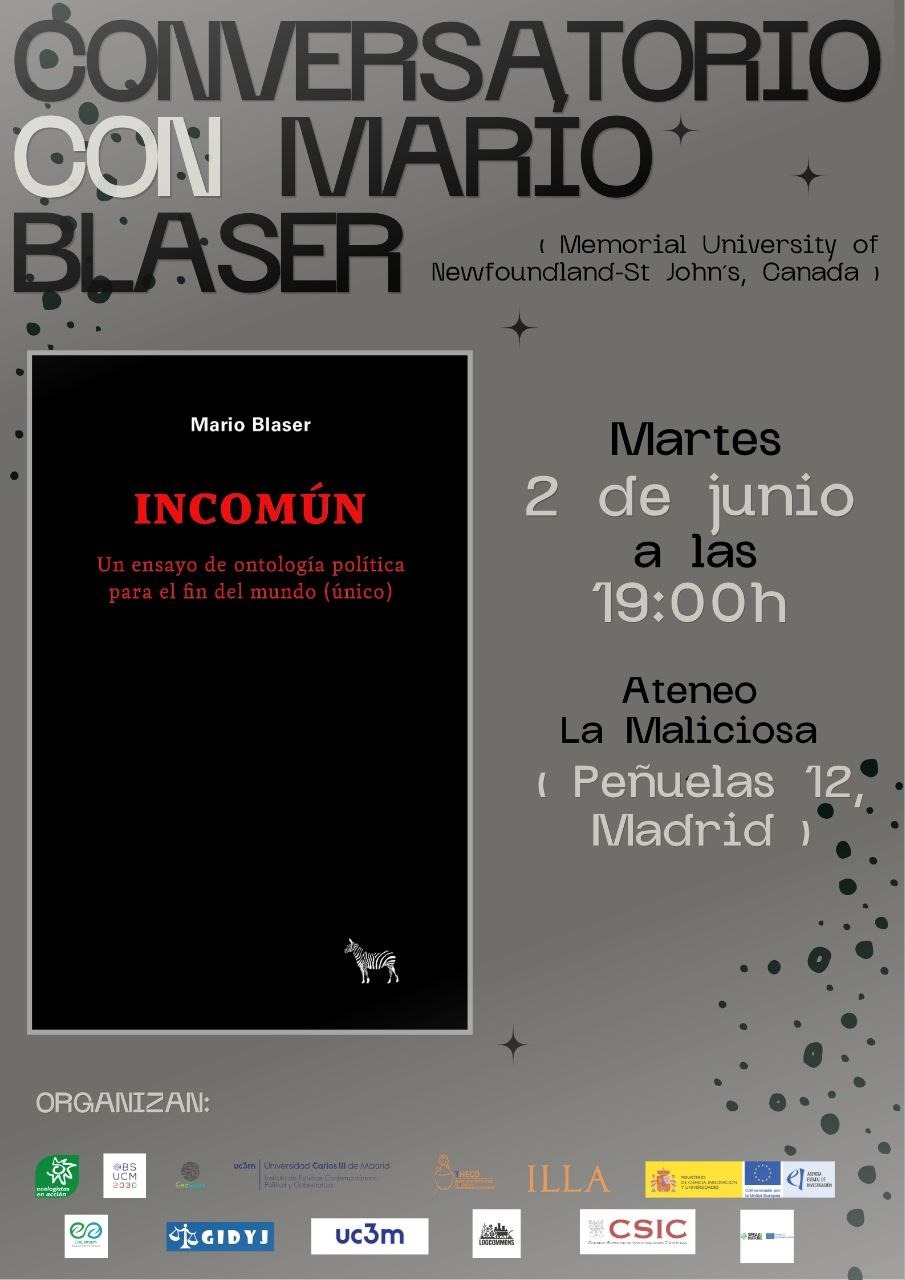
Mario Blaser has conducted research on colonization/decolonization politics through the analysis of conflicts related to development and/or conservation projects. Within this line of research, he has developed a “political ontology,” an analytical framework that questions whether conflicts surrounding what are defined as resources (whether natural or artificial) can really be reduced to that alone. A paradigmatic example would be a conflict over the prohibition of caribou hunting, which local Indigenous peoples might oppose because it interferes with their relationship with a “protective spirit,” whereas the State sees in it only an animal, a natural resource to be managed and protected. The usual characterization of this kind of conflict as a clash of cultural perspectives regarding an “animal” is entirely insufficient from the perspective of political ontology, since it opens the door to establishing a hierarchy among “cultural perspectives,” a hierarchy that often renders local perspectives “more cultural” than those supported by science, the State, and corporations. Political ontology argues that what takes place in these conflicts is a clash of realities, often resolved through colonial imposition. The key question raised by political ontology is how to address these conflicts without colonial impositions.
For him, working with and learning from Indigenous traditions opens up a path for addressing, in unexpected ways, the challenges we face today, from growing inequality to environmental crises. His objective is to rescue from imposed invisibility the idea that other viable forms of existence are possible, while also showing how those forms of existence struggle intensely against an invasive modernity that tolerates nothing different from itself. Some of the themes through which he approaches this broader problem include:
- The practices and politics of care for non-human beings.
- Notions of the good life, from development to “Buen Vivir.”
- Natural resources versus sentient landscapes.